Showing posts with label trees. Show all posts

Sunday, August 23, 2026

Gmelina, a Tree That Fills the Needs for Lumbers in the Philippines

 Gmelina is a fast-growing deciduous tree belonging to the Lemnaceae family. It is a native to Southeast Asia, Australia, India, New Guinea, and New Caledonia.  It has a grayish grown bark; the wide spreading canopy has leaves that are heart shaped and yellow flowers that turn into small drupes. The tree can grow up to thirty meters and has a life span of about 30 to 40 years. Its small round fruits can be food for birds, fruit bats, monkeys, and other animals. The fruits are even edible to humans, but they are just ignored because it is not widely acceptable as food and its bittersweet taste is not suitable to their taste. Gmelina flowers are relished by bees for the nectar that produces high-quality honey. Gmelina leaves are good fodder for cattle.                                                                           

In the 60’s the forest cover of the Philippines was fast declining. And there was the need to protect native hardwoods such as nara, molave, red lauan and others from excessive logging, and to preserve the remaining forests. It was in that context that fast-growing trees from other countries such as gmelina and mahogany were introduced.  

The cutting of premium hardwood native trees is already banned by the government through the DENR. In this respect the planting of gmelina and mahogany for investment in agro-forestry has become financially viable. Farmers started growing these trees. The return on investment was long-term but profitable. The tree can grow fast in its first 5 to 8 years and slow down around seven years, and it can be harvested for its lumber in a decade or less.

                                                                                                                                                               Gmelina wood is used in house construction and making of furniture. It is also used in the production of plywoods, paper pulps, fuel, and charcoal. Though it is not as hard as the native hardwoods, gmelina is categorized as moderately hard which makes it an ideal wood to work with in wood crafts. Its softer texture and lighter weights make it an ideal material for making musical instruments like ukelele and acoustic guitars. Its straight grains and lightness make it suitable for guitar sound board in place of more preferred but imported and expensive spruce. Gmelina wood is susceptible to dents, warping and termite attack, so that it must be chemically treated and properly dried before use.

Because of the scarcity of native tree woods, gmelina and mahogany are currently the go-to woods for lumber, especially on inner house carpentry works. Coco lumber can also be used in low-cost housing and temporary buildings infrastructures and scaffoldings, but coco lumber is inferior to real tree woods and is more susceptible to termites and rot when exposed to water and rains.

                                                                                                                                                                 The introduction of gmelina in the Philippines has raised concern about the forest ecosystem since gmelina is not native tree and is considered as an invasive species that can crowd out, outgrow and even kill native trees in competing for nutrients from the soil. The situation is not good for the flora and fauna because native animals like insects, mammals, and carnivores depend on these native trees for foods and subsistence. It will also kill plants near its location because it consumes much water and nutrients in the ground leaving little for the undergrowth plants to survive.

Sunday, February 1, 2026

The Benefits of Tree Planting


The occurrence of global warming has brought about serious environmental problems such as floods, rising sea levels, drought, the extinction of plant and animal species, and the disappearance of coral reefs. Some people blame these effects solely on deforestation. However, the destruction of trees is not the only cause of global warming. Other contributing factors include the excessive use of fossil fuels to operate vehicles and factories, methane emissions from animals, and various agricultural and industrial activities. These activities cause greenhouse gases to be trapped in the atmosphere instead of escaping into space, resulting in the heating of the Earth’s surface.

To address these problems, we need to regulate activities that harm the Earth’s ability to sustain life, and we must also develop practical solutions. In this article, the discussion is limited to tree planting. Plants and trees are essential to human existence, yet over the past centuries, humans have destroyed vast forest areas, contributing significantly to climate change. Restoring the world’s lost rainforests to their original state is difficult because of logging, urbanization, industrial and agricultural development, and the construction of government infrastructure projects. However, we can compensate for some of this loss through reforestation or tree planting. By doing so, we can help mitigate the harmful effects of global warming. The long-term benefits of tree planting include the following:

Trees absorb waste gases and provide fresh air. To sustain life, trees and plants undergo a process called photosynthesis, in which they use sunlight, water, and carbon dioxide to produce glucose as food. During this process, plants release oxygen as a waste product—the air that humans and animals breathe. Without photosynthesis, life on Earth would not exist. Through this process, trees help maintain the balance of carbon dioxide and oxygen in the atmosphere. An excess or deficiency of either gas is harmful. Fewer trees result in higher levels of carbon dioxide in the atmosphere, which contributes to global warming.

Trees also help provide clean water. Their roots act as natural water filtration systems by absorbing rainwater and trapping pollutants such as nitrogen and phosphorus. Beneficial microorganisms around the roots break down harmful substances, helping produce clean groundwater. In addition, tree roots hold soil in place, preventing soil erosion. This reduces the amount of sediment and pollutants that flow into rivers and streams. Trees planted along riverbanks help keep water sources clear and clean.

Trees help regulate temperature and create a more pleasant environment. They provide shade during hot days, and their leaves block sunlight, reducing the amount of heat that reaches the ground. Shaded areas with trees can be 2 to 8 degrees cooler than areas without them. Leaves also release water vapor, which absorbs heat from the air. As a result, the surrounding temperature becomes cooler, more comfortable, and more livable.

Trees beautify the environment and improve human well-being. Garbage in backyards and landfills is an eyesore, while plants and trees with green leaves and colorful flowers are visually pleasing. Green surroundings reduce glare from sunlight and are often associated with life and vitality. The presence of trees, along with birds and insects that depend on them, adds beauty and liveliness to our daily surroundings.

Trees help prevent floods and soil erosion. During rainfall, leaves intercept some raindrops, reducing the amount of water that directly hits the ground. This lessens soil erosion. Tree roots also absorb water from the soil, decreasing surface runoff and the risk of flooding. By holding soil together, roots help prevent landslides. Areas without trees are more prone to erosion, which causes sediments to accumulate in waterways and leads to flooding during heavy rains.

Trees enrich ecosystems and promote biodiversity. They provide habitats for birds, insects, and animals that depend on their leaves, flowers, and fruits. Underground, tree roots support earthworms, fungi, microbes, and other microorganisms. Plants, animals, and humans depend on one another and on their non-living environment to survive. This interaction between living and non-living components forms ecosystems in forests, parks, and even urban areas. If the Earth were to lose all its forest cover, many plant and animal species would become extinct.

We already know the many benefits trees provide. The right time to plant them is now. Trees can be planted in backyards, along city streets, or in wildlife conservation areas. Large-scale tree planting requires coordinated efforts among private sectors, non-government organizations, government agencies, and civic groups. Trees are essential for human survival and for the protection of our planet.


Thursday, July 11, 2013

The Bees, the Pollinators


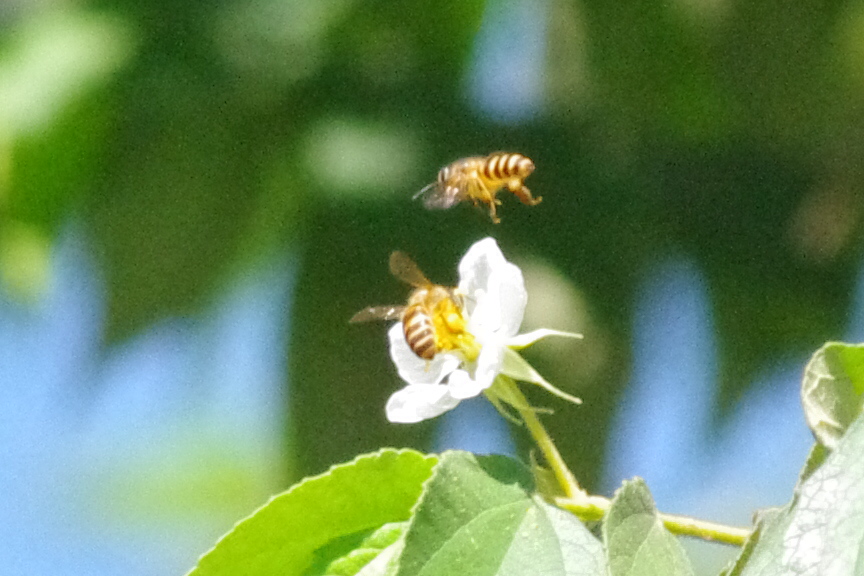
At the side of my house there grows a wild fast growing but rather small size tree with a soft wood called “mansanitas” or small apple. But its fruit is in no way related to the real apple. It has very small succulent fruit with many soft seeds and a skin that is colored red to purple when ripe. Although the fruit is sweet and edible, it is mostly a treat for animals. Only few kids eat the fruits as a sort of playful activity rather than to fill themselves with it. Adults completely ignore the fruit.


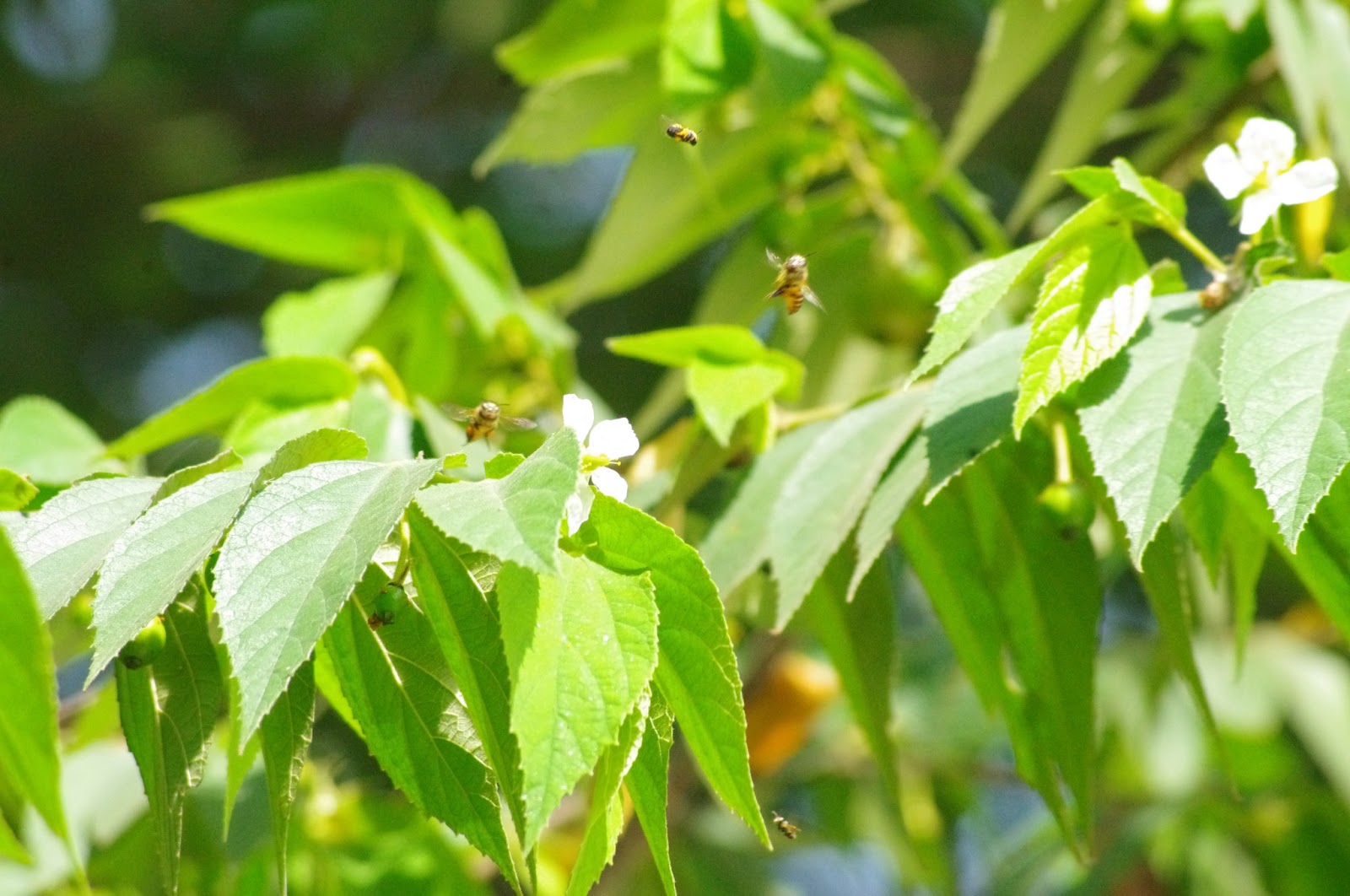
Because of its flowers, the tree has attracted insects particularly bees that search for foods. Bees and other insects are some of the agents of pollination. Others include man, rain and wind. The bees in the tree are busy particularly in the morning when they fly into flower and sip its nectar. Pollen grains stick to a bee's legs and body as it brushes the anther of the flower. As the bees fly from one flower to another some of the pollen are dropped into the stigma of a flower. A tube then grows down from the stigma into the ovule. This will cause the ovary of the flower to be fertilized by the male cells that comes from the pollen. Fertilized ovary grows in size and develops into a fruit.


In most cases the pollen of a flower is transferred by the bees to another flower of the same plant or to another flower of another plant of the same species. A fruit that develops in the latter situation will have a healthy offspring. A flower that is fertilized by its own pollen or a flower that is fertilized from pollen of another flower of the same plant could result in an inferior seeds or offspring that are incapable of surviving a harsh environment or weather. Some plants have a built in system to prevent self pollination by having stigmas that reject pollen coming from the same flower.


Some plants that are very small like grasses are pollinated by the wind. Dry minute pollen of some grasses are blown away and fertilize the ovule of flower of other distant grasses of the same species.

Plants make themselves conspicuous with their beautiful colored flowers to attract pollinators. Other plants that have dull colored flowers make up for their deficiencies by emitting a fragrant scent especially in the evening. That kind of plants will give a nice ambiance at night with their pleasant smell so that it seems that the surrounding is sprayed with perfume.


The scene of the tree by my house is a sort of community of several species of animals that share a common purpose to sustain themselves. The process of pollination is a way on which the bees can feed themselves and produce their own offspring. For the tree, it is a means by which it can reproduce itself when fruits are developed as a result of pollination. Discarded seeds are scattered on the ground after the fruits are consumed by man and animals. The seeds in turn develop into new plants thus continuing the tree’s life cycle.  Because of pollination man and animals are able to have foods such as vegetables and fruits. Without it they could not have sustained their life on earth.


Wednesday, December 26, 2012

Vicente de Lara Park


Last updated October 1, 2025


One of the oldest parks in Cagayan de Oro City is Vicente de Lara Park. It is used to be named as MacArthur Park in honor of General Douglas MacArthur, the legendary American general in World War II who spent a considerable time of his military service in the Philippines. The renaming of the park is a fitting tribute to the late Honorable Vicente de Lara who served as governor of the province from 1954 to 1961. During that time Cagayan de Oro City was administratively and politically a part of Misamis Oriental.


The Park is located in front of the provincial capitol building, the seat of the government of Misamis Oriental. Although it is inside Cagayan de Oro, the park is owned and administered by the province of Misamis Oriental. Old nara, mahogany and other hardwood trees are the park’s main sight. Those trees provide pleasant atmosphere to people who have official dealings in the capitol, to visitors and to other people who want a respite from the sweltering heat of the sun especially in summer days. The park also serves as an ideal place to stroll in the evening, to jog, to do other physical exercises especially in the early morning or to pass the time while enjoying the park’s amenities  such as the low concrete benches and the shade that is provided by trees.


                                          The park at night


Improvements have been made by Governor Oscar Moreno to do a makeover on the park. The pathways are paved, a fountain was built, and trees are adorned with lamps that emit decorative lights in the evening. There is an open structure where the public can play chess, and more significantly the Press Freedom and The Heritage monuments were constructed.


The Heritage Monument is a main attraction of the park that occupies a central place that is fronting the provincial capitol. The monument which was designed and constructed by Eduardo Castrillo honors the tradition, culture and the people that contributed to the development of the province.


A major addition to the park is the Press Freedom Monument which has three bronze cast figures symbolizing the broadcast, print and photojournalism media. The monument was constructed by Eduardo Castrillo, a prominent Filipino sculptor. Since its completion, the area at the monument has become the venue for the press people to redress their grievances against the killing of journalists, the curtailment of press freedom and the other significant issues that are of public interest. 

Related posts:

Cagayan de Oro City Museum (The Old Water Tank) http://lapasan-myblognoel145.blogspot.com/2025/09/cagayan-de-oro-city-museum-old-water.html

The McArthur Memorial Marker of Cagayan de Oro https://lapasan-myblognoel145.blogspot.com/2012/11/the-macarthur-memorial-marker-of.html

The Divine Mercy Shrine of El Salvador, Misamis Oriental https://lapasan-myblognoel145.blogspot.com/2014/09/the-divine-mercy-shrine-of-el-salvador.html

Mangima Canyon https://lapasan-myblognoel145.blogspot.com/2013/11/mangima-canyon.html

A Taste of Nature at Initao-Libertad Protected Landscape and Seascape in Misamis Oriental https://lapasan-myblognoel145.blogspot.com/2012/08/a-taste-of-nature-at-initao-libertad.html


Friday, October 19, 2012

The Starlings in My Front Yard


There was a tree that grew in my front yard. As it became big it killed other surrounding plants because its extending leaves and branches denied other plants like guava, bushes and weeds the life-sustaining rays of the sun. The medium-sized softwood tree which is called “alum” by the locals is now fully grown.


Birds and insects are attracted to the flowers and fruit of the tree. Small insects fly into the small flowers to sip their nectar, and small birds perch on branches and twigs to spot fruits and eat them. Birds seem to relish the tiny fruits that are too small and insignificant for humans or other animals to consider for consumption. The tree has also become the roosting place for free range chickens in the evening. For me, it has become an object where I can do bird watching at the convenience of my home.


The presence of trees especially on the higher ground of our family’s compound area made them the sojourns or roosts of some species of small birds. Warblers, sparrows, swiftlets, pied fantails, zebra doves, humming birds, starlings and other birds fly to the trees to perch and eat fruits. Some of them are residents to our compound and nearby areas while others are just visitors. The chirps of the birds are pleasantly audible during dawn and dusk. I can also hear the songs and the mating calls of some of the birds during the day. Their sounds really brighten up my day.                              


At present there is a species of small bird that catch my attention. It is the starling which is called “tusing” by the locals. Although the starlings are indigenous and endemic to my locality, it is only recently that I have gotten a close look on them. The birds used to dwell in wooded areas farther from human habitations. But as the area of their habitat dwindled due to urban development and expansion, the birds have adopted to dwell near or in built up areas that have still plants and trees where they can get their foods from.                                                                                                                                                                         


The tree that I mentioned at first attracted only the birds that usually visit our compound area. But later I noticed that small black figures were swiftly landing on the twigs and branches, and flew away fast at the slightest presence of anything that scared them. Nevertheless, they become frequent visitors of the tree because they enjoy eating its fruits. Mid morning is their favorite visiting period. Although they have become accustomed to the presence of humans who leave them alone, the birds still keep their distance and flee when humans and other animals get too close to them.                                                                                                         


I came to know later that the name of the bird is the Philippine Glossy Starling. It is a small black bird. The juvenile however has brownish feathers in its upper body and a grayish and brown streaked underside.  Overtime, the plumage turns to black when the young birds become fully mature. The sound of the starling is somewhat similar to that of a whistle of a grown-up male person. One of the starling's most distinguishing features is its scary-looking bloodshot eyes.