Showing posts with label Turkey. Show all posts

Tuesday, April 21, 2015

The Armenian Genocide (Calling a Spade a Spade)

Photo credit: Henry Morgenthau (Wikimedia Commons)
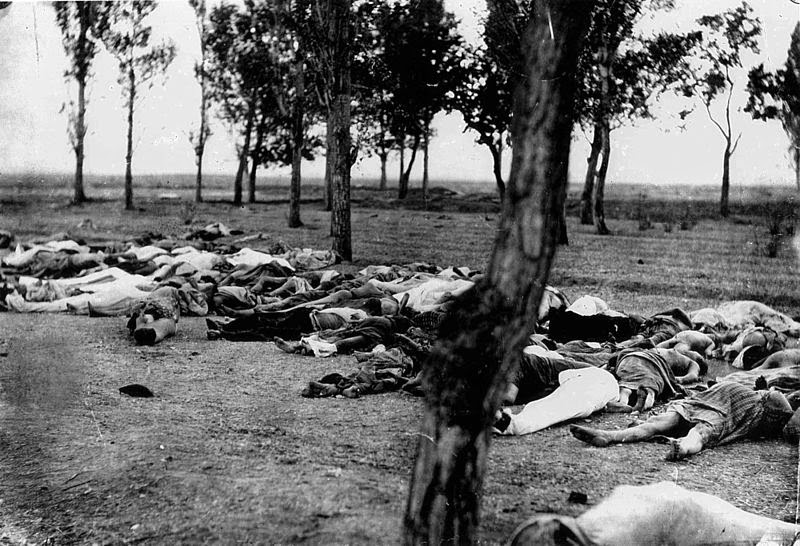
April 24, 2015 is the centennial of the first genocide that took place in the 20th century. The Armenians who were the victims of the catastrophic human tragedy want the world to know and remember the sufferings of their ancestors and the atrocities perpetrated by the forces of the defunct Ottoman Empire at the height of World War I. It is claimed by various reliable sources that as many as 1.5 million Armenians were systematically exterminated by the Ottoman authority using its military and other institutions.

Photo credit: Aurora Mardiganian (Wikimedia Commons)

Wikimedia Commons
The massacres took place with the backdrop of the First World War and the Russian Revolution which resulted to the abdication of Czar Nicholas II of Russia. The Ottoman Empire on which the present day country of Turkey is carved out joined the war on the side of the Central Powers which included among its allies Germany and the Austro-Hungarian Empire. Russia, a rival power of the Ottoman Empire joined the war on the side of the allies which also included France and Great Britain among other nations. The event of the Russian Revolution saw the Russian forces withdrew its participation in the war in order for the Czar to attend to more pressing domestic political issues at home. Although the Allied Forces were victorious in the war and the Ottoman Empire defeated, minorities such as the Armenians who sided with the Russians suffered unimaginable sufferings at the hands of the Ottoman forces and administrators. Atrocities inflicted on the Armenians include summary executions and their expulsions from their native lands and deportation to other territories within the empire. They were made to march to hostile environment like the desert and were exposed to the heat and other elements without food.

Wikimedia Commons
Turkish authorities asserted that the huge number of casualties of the Armenians during the First World War was not a Turkish Ottoman conspiracy to exterminate the Armenians as a people. And that the casualties were the result of the war on which the Armenians sided with the Ottoman Turks’ enemies- the Russians. Turkey added that Armenians casualties include those who died from other causes like diseases and starvation, and that Turkey too had its share of large casualties during the war, and that the enemies too had committed acts of brutalities against the Ottoman Turks during the war.

Pope Francis in his mass at the Saint Peter’s Basilica in Vatican on April 12, 2015, called the tragic event during the First World War as genocide. President Recep Tayyip Erdogan of Turkey quickly condemned the Pope’s declaration calling it spreading hatred and unfounded claims against Turkey. He even went further by recalling his ambassador to the Vatican. Receiving criticism on his remark, the pope also got appreciation from different organizations and countries for his candidness and courage to say things in history as what they really are. The European parliament also made non-binding resolution calling the Armenian slaughter genocide.

Armenians around the world are earnestly making effort to let the world know of the genocide during the Ottoman era. During Barrack Obama’s first presidential campaign he made hints to the Armenian-American political supporters that the United States would consider a proposal to call the massacre genocide. But since then after his election as president no official announcement has come from his office regarding the proposal.

The Armenian campaign has already got so much attention and world recognition for the memorable but tragic event. Celebrities such as Kim Kardashian who is of Armenian descent and her husband Kanye West have visited several memorials and events that are related to the genocide.

Photo Credit: Henry Morgenthau (Wikimedia Commons)
The Armenian genocide was an event on which a mighty Muslim Ottoman Empire used its armed forces and other resources to systematically annihilate the Armenians who were its small minority Christian subjects. The need for the world to recognize the genocide comes at a time when a group such as ISIS, Boko Haram and other terrorist groups are wreaking havoc in the Middle East and Africa, killing people because they do not share their belief. Turkey can also show its sincerity by admitting the excesses of its predecessors, the Ottoman Empire, and calling their action genocide. Turkey was not yet a republic when the reported massacre took place from 1915-1918.

Wednesday, December 3, 2014

Hagia Sophia, a Beautiful, Historic World Monument

Photo by Bigdaddy (from Wikimedia Commons)
Hagia Sophia or the Church of the Holy Wisdom in Greek, Sancta Sophia in Latin and Aya Sofya in Turkish is a historic monument of two great empires that shaped the course of world history- the Roman and Ottoman Empires. It also served as a house of worship of adherents of two of the world’s largest religions- Christianity and Islam. It was the largest cathedral in the world until 1520. Hagia Sophia is famous for its massive dome.

Hagia Sophia was built on the site where Emperor Constantine built a wooden church. The second church was built by his son Constantius and the Emperor Theodosius the Great. That church was burned. Under the supervision of Justinian I, the church was rebuilt in its present form around 532 and 537 AD.

Constantine was the first Roman Emperor who became Christian. He later promoted Christianity and moved his capital from Rome to Byzantium, an ancient Greek city. After he defeated his rivals, Constantine rebuilt Byzantium and renamed it Constantinople. It later became the capital of the eastern half of the Roman Empire which was also called the Byzantine Empire. Its heartland was Asia Minor and the Balkans.

Constantinople was situated on the southern coastal tip of the Balkan Peninsula along the Strait of Bosporus that separates the continents of Europe and Asia. The city’s strategic location provided the Byzantine Empire easy economic and military access to its territories across Asia and Southern Europe.

Justinian hired architects Isodore Militus and Arthemius of Tralles, both teachers of Geometry to design the church. He imported materials from neighboring places such as Ephesus, Athens, Rome and Delphi. The original dome of the church which Militus and Arthemius designed collapsed in an earthquake in 558. The replacement of 563 had to be repaired after a partial collapse in the 9th and 14th centuries.

In 1204 Hagia Sophia was attacked and sacked by the crusaders and looted of its properties. They arrested the Patriarch of Constantinople and replaced him with a Latin bishop. This event irreconcilably divided the Orthodox and Roman Catholic Churches which had long standing disputes that started from the great schism of 1054.
Photo by Andreas Wahra (from Wikimedia Commons)
Islamic text inside Hagia Sophia
In May 1453, Constantinople, the seat of the Byzantine Empire and the greatest city of Eastern Christendom at that time fell to the Muslim Ottoman Turks under Sultan Mehmet II. Amazed by the architectural beauty of the church, he converted Hagia Sophia into a mosque. Since then it remained a principal mosque for about 500 years. Hagia Sophia’s design then served as model of many mosques built around Constantinople and its neighboring areas.

The prominent feature of the cathedral is its dome which measures 230 ft (70 m) in width and 246 ft (75 m) in height. The dome is supported by pendentives which are rested on a square of 4 columns below. The 48 windows around the base of the dome reflect sunlight everywhere into the interior of the nave.

A mosaic depicting Jesus (center)
Mosaic of Virgin Mary and child Jesus. Photo by Griffendor (from Wikimedia Commons) 
The changes made during the Turkish era had markedly altered the outer appearance of Hagia Sophia so that it was indistinguishable that it was once a church. There are buttresses built to support the outer walls to ensure their endurance over the century. Four minarets were added by the corners of the church. The mihrab, the fountain, and mausoleum give the Hagia Sophia a mosque appearance. However, the inside of the edifice reveals the original purpose of its building. There are 6th century church features such as mosaics painted on the walls depicting various Christian religious scenes. When Hagia Sophia was a mosque some mosaics were covered with plaster because of Muslim prohibition of figurative imagery. Further renovations of the church that was turned into mosque were made by Abdulmecid in 1847 who invited Swiss architects Gaspare and Giuseppe Fossati to do the job.

After the dissolution of the Ottoman Empire and following the establishment of Turkey as a nation, Constantinople was renamed Istanbul in 1930, and President Kemal Attaturk had the Hagia Sophia secularized by turning it into a museum in 1934.

Hagia Sophia is a masterpiece of Byzantine architecture. This priceless historic world monument is a UNESCO world cultural heritage site. Hagia Sophia is a major landmark and a tourist attraction of Turkey. All year round it is visited by tourists from different parts of the world.

Related posts:

Thursday, November 6, 2014

Kobane, a Significant Battle Site between the Kurds and the ISIS

A US Air Force Photo from Wikipedia
The initial military successes of the ISIS in Iraq and Syria have been reversed with the recent gains made by the Iraqi and Kurdish forces which are supported by US and coalition airstrikes. Waging a jihad and trying to establish a caliphate based on its extreme interpretation of Islam,  the Islamic State, an offshoot of Al Qaeda, is a big threat not only to the security of the Middle East but also to the world.                                                            
Although it claims to be inspired by Islam, the ISIS is disowned by Islamic religious and political leaders who say that its action is un-Islamic. In the battle fronts Muslims and non-Muslims are the victims of the ISIS’ aggression. Local tribesmen have to cooperate or do the bidding of the terror group lest they be punished. ISIS brutalities include among other acts mass executions of captured enemies and kidnappings of women and making them as sex slaves.

The terror group is able to sustain its operation through seizure of oil fields and selling oil through the black market, kidnapping for ransom and other illegal activities. It is also able to have its supply of recruits with the use of the internet. Its effort in the social media such as Facebook and Twitter has attracted fresh fighters from western countries, USA, Canada and other parts of the world. Lately, however, the number of new arrivals has decreased which is an indication that the appeal of the terror group to attract new members to its fold might have been affected by flood of news report depicting it in a very bad light.

The Kurds are indigenous people in parts of Turkey, Iraq, Syria and Iran who are courageously resisting the ISIS advance into their territory. While some Iraqi forces ran away from the enemies in battles, the Kurds prefer to fight to the death rather than giving in to the demand of the terror group. The Kurdish forces in the battle front include even women. The Kurds are the largest stateless ethnic minority in the Middle East who has suffered long years of persecution from the leaders in the four countries where they live in.

To show its power, the ISIS has to deal with the Kurds defiance. It has attacked some Kurdish inhabited area to include Kobane which is situated in the Syria-Turkish border. The ISIS captured part of Kobane on September 2014. But fierce resistance of the outgunned Kurds has kept the jihadists from moving further. At that time many analysts thought that it would just be a matter of time before the town could fall to the terrorists. However, the intervention of the US with its air support has helped the Kurd stall the advance of the ISIS and prevented it from capturing the city.

Turkey which was earlier hesitant to provide military assistance to the embattled Kurds in Kobane has now allowed hundreds of peshmerga forces to enter Kobane through its territory. This peshmerga forces now is using artillery to pound ISIS positions. This development is a big boost to the morale of the Kurds in its effort to repel the ISIS from Kobane.


To some analysts Kobane is of less significance than to other areas that are also besieged by the terrorists. But the city has now gained prominence with the attention given to it by the world media. The city is now widely known to many people all over the world because of the ISIS phenomenon. Whichever side prevails in this ongoing battle will have the psychological edge over its opponent. For the ISIS a victory in Kobane is an inspiration to expand the coverage of its caliphate, and for the Kurds, a victory is a promotion of solidarity and loyalty to their own ethnic group and to the land or the territory which they consider as their own. 

Friday, March 21, 2014

The Glory and the Death of Alexander the Great


Funeral procession of Alexander the Great

In his return to Babylon after his military campaigns in India Alexander the Great was suddenly afflicted with a fever after drinking sprees with an officer and a friend. His condition deteriorated as days passed and he later became speechless and in the throes of death. His officers and soldiers anxious to see their king and commander for the last time were granted of their request to file past him at his deathbed. With what remained of his last strength Alexander acknowledged them with nods of his head or movements of his eyes as they passed by him. The king died on the 10th or 11th of June 323 BC after about 10 days of sickness at age 32. 

Egyptians and Chaldean embalmers were brought to the royal palace to treat and preserve the remains of the great king and conqueror. They had to use their skill to make the body sweet smelling and incorruptible. Alexander’s remains was placed in a golden sarcophagus and submerged in vat of honey. 

Alexander the Great had not given clear instruction as to who should succeed him. He only gave a vague statement that after him his throne should go to the strongest. Just before he died, he however, gave his signet ring to Perdiccas, a commander of the cavalry and one of his most trusted generals. That was a gesture that Perdiccas would play a significant role on matters regarding succession and the running of the affairs of the empire after Alexander’s death. 

When Alexander died, his Bactrian wife, Roxanne, was pregnant, and a royal custom had it that Alexander’s male offspring would be his successor. And Roxanne indeed bore a son who was named Alexander IV. Perdiccas, and Antipater acted as guardians and co-regents of the child. However, some of the troops led by Meleager, mutinied since they were not included in the agreement. The conflict was settled when it was agreed upon that Philip III the mentally handicapped half brother of Alexander  the Great and Alexander IV would be joint kings. 

It was decided that the remains of Alexander the Great had to be brought back to Macedonia, the place of his birth. A funeral cart that was adorned with gold and jewelries to carry the body took about two years to complete. When it was ready a funeral procession all the way to Macedonia was started. The well built and beautifully designed funeral cart was drawn by a team of mules and was escorted by an army of honor guards who were commanded by an officer. Road builders smoothed the road ahead of time for the cortege to move along. As it passed by, thousands of people lined up along the roads to witness the greatest funeral procession in all of history.

Ptolemy I Soter, one of Alexander’s general who was satrap and future king of Egypt brought with him a sizable army and forcibly diverted the remains of Alexander in Syria. He then brought it to Egypt and built a mausoleum in Memphis. Ptolemy’s action was motivated by his desire to be the king of Egypt and its surrounding areas. It was also in reaction to Alexander’s soothsayer named Aristander prophecy that the land where Alexander would be buried would be happy and unconquerable forever. Ptolemy thought that his possession of the remains of Alexander the Great would legitimize his rule of Egypt. 

Perdiccas the regent of joint kings Philip III and Alexander IV was assassinated in 321 BC, and soon thereafter Olympias, the mother of Alexander the Great, his son Alexander IV, Roxanne, his wife and his half brother Philipp III were murdered during the course of the wars of succession by the generals of Alexander the Great. The empire left by Alexander was partitioned by his generals into four:  Ptolomy- Egypt, Seleucus- Mesopotamia and Syria, Lysimachus- Asia Minor and Thrace, Cassander- Macedonia and Greece.  

The remains of Alexander the Great was transferred to Alexandria, Egypt by Ptolemy II Philadelphus, the son and successor of Ptolemy I Soter and it stayed there until late antiquity. Another king of the dynasty, Ptolemy IX Lathyrus removed the golden sarcophagus to be minted into coinage and replaced it with a glass one. Alexander’s mausoleum was visited and viewed by some notable personalities of antiquity who included Roman Emperors such as Pompey, Julius Caesar and Augustus. It was said that Julius Caesar accidentally knocked the nose off Alexander’s face during that Roman Emperor’s visit. Caligula took away Alexander’s breastplate for his own use.  At around 200 AD Roman Emperor Septimus Severos closed Alexander’s tomb to the public. During the role of the Romans the resting place of Alexander was no longer known.

The Ptolemaic dynasty buried its kings and members of the royal family beside the tomb of Alexander which was a shrine that was visited by many people who some of them even considered Alexander as a god. During his lifetime Alexander believed that he was the son of Zeus and even proclaimed himself as god. The power of the Greek/Macedonian kings eventually declined and the mighty Roman Empire took over most of their territories. During the Roman era Jesus Christ founded a religion which spread like wildfire in the Roman Empire after His death. The Egyptians converted to the religion and pagan practices and rituals were gradually discarded. It was probably for that reason why the visit to Alexander’s shrine later lost its importance and the upkeep of his tomb was neglected. A myth had it that the tomb of Alexander lay under an early Christian church dedicated to Saint Athanasius, an early Christian bishop. This church was in turn converted into the mosque of Prophet Daniel during the Arab conquest.                                                                       
In 640 AD the Arabs conquered Egypt, Persia and other neighboring countries. The rise of Islam saw the conversion of Christians, Zoroastrians and pagans to the Islamic faith, and Arabic culture and language were introduced to conquered lands. The Muslim conquest after the fall of the Greek and Roman empires has a profound influence on the culture, religion and demographics of their former possessions which are now Iran, Afghanistan, Iraq, Syria, Lebanon, Egypt, Jordan, Israel, Turkey, among other places today. 

Alexander the Great is one of history’s most famous personalities. He was a legendary king and a military commander par excellence. His daring and recklessness in battles on which he sustained life threatening wounds awed his soldiers. Personally leading his men in his campaigns, he shared with them their pains and hardships in battles and also cherished with them the joys of their victories. As a commander his mere presence was enough inspiration for his men to readily give up their lives in battles. However, like all mortals there were negative sides of him. He was said to be moody and was an excessive drinker. There were even insinuations that he was a homosexual. But undoubtedly Alexander was a very courageous warrior, a charismatic leader and an astute politician. He won all the battles that he engaged in and created the biggest empire known to the ancient world, and united the different peoples in it under his leadership. None of his generals could match his exploits or his ability to hold the empire together as one. When Alexander died his empire quickly fell apart and its territories fought over and divided by his generals.

Related posts:
Amazing Fulfillment of Biblical Prophecies on Alexander the Great https://lapasan-myblognoel145.blogspot.com/2014/03/amazing-fulfillment-of-biblical.html

Alexandria, Egypt, the Eternal City of Alexander the Great https://lapasan-myblognoel145.blogspot.com/2015/03/alexandria-egypt-eternal-city-of.html

History’s Great Love Story: Cleopatra and Anthony https://lapasan-myblognoel145.blogspot.com/2016/02/historys-great-love-story-cleopatra-and.html